










|
Venezuela Approves Landmark Reform
Reform opens country’s hydrocarbons sector to foreign companies.
BY CHRISTIAN LEATHLEY, DANIELA PAEZ AND JOSE LUIS REPETTO
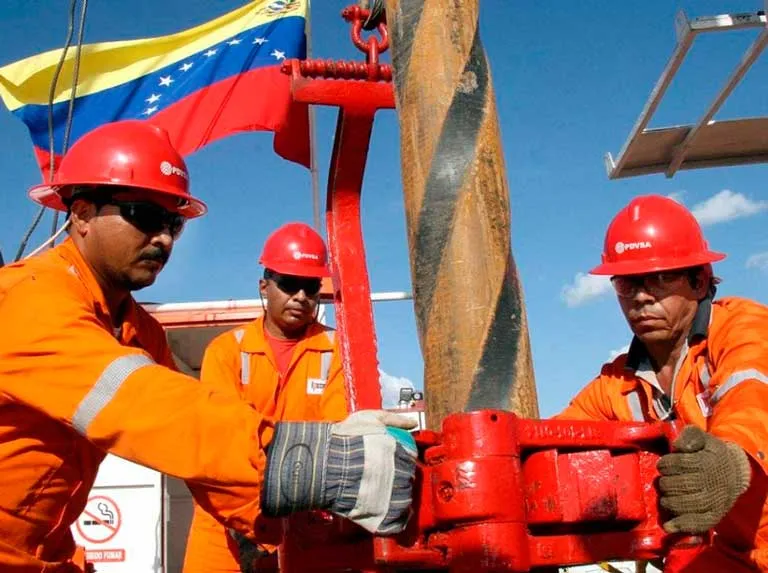
Venezuela has enacted the most significant reform to its hydrocarbons regime since the sector was nationalized in 1976 (“Reform”). On January 29, 2026, the National Assembly approved—and Acting President Delcy Rodríguez immediately signed into law—an overhaul of the Organic Hydrocarbons Law that reshapes how private and foreign companies may participate in the country’s oil and gas industry.
Following the enactment, the U.S. also announced the ease of some of its economic sanctions on the Venezuelan hydrocarbons sector (including by granting a general license in respect of certain transactions with PDVSA).
Below, we highlight the key features of the new legal framework and their implications for investors.
- Direct participation of private companies in exploration and production
Under the previous regime, private companies generally could not carry out direct exploration and production activities. Instead, they were required to form a joint venture with a Venezuelan state‑owned entity—typically PDVSA, which would hold a majority stake in the joint venture (which the law refers to as a “mixed company”).
The Reform introduces an alternative to mixed companies, allowing private companies incorporated in Venezuela to undertake so-called “primary activities,” i.e., upstream activities involving the exploration and operation of oil fields trough a contract with state-owned operators (“Upstream Contracts”):
Private companies domiciled in Venezuela may now directly explore, extract, collect, transport and store oil and gas under contracts with PDVSA or other wholly state‑owned entities. To do so, state‑owned operators, with authorization of the Ministry in charge of the hydrocarbons sector (“Ministry”), may assign through contract their existing exploration and exploitation rights and transfer the assets required for exercising such rights to the private companies, allowing these companies to operate fields directly.
Upstream Contracts will not be subject to Venezuelan public procurement laws, thereby streamlining their negotiation and execution.
To execute an Upstream Contract, private companies domiciled in Venezuela must demonstrate financial and technical capacity through a business plan approved by the Ministry.
Private companies domiciled in Venezuela that execute an Upstream Contract may commercialize all or part of their production directly, subject to ministerial approval.
This represents a significant opening of the upstream sector to private participants and a departure from the decades‑long PDVSA‑dominated structural model.
- Protection against negative impacts on hydrocarbon projects
The Reform introduces an economic stabilization mechanism applicable to Upstream Contracts and to exploration and production contracts involving mixed companies that predate the Reform. Under this mechanism, if any subsequent legal, fiscal, regulatory or contractual changes materially and adversely affect the project’s economic conditions after a contract has been signed, the Ministry must agree to adjust the contract to restore its original economic balance.
- Expanded rights for minority shareholders in mixed companies
The Reform grants minority shareholders (generally private companies) in mixed companies new rights—subject to prior shareholder agreements—including the ability to:
Directly market all or part of the mixed company’s production, with Ministry approval.
Directly manage the mixed company’s technical operations or appoint a specialized service provider to do so.
This development could materially enhance the commercial and operational role of private participants in existing ventures.
- Taxation and fiscal framework
The Reform introduces changes to royalties, fees, and the integrated hydrocarbon tax regime. Future implementing regulations are expected to clarify how these adjustments will operate in practice, including whether they may enhance project economics for foreign participants.
- Transitory provisions
Within 180 days of the entry into force of the Reform the Ministry will evaluate existing mixed companies and may agree with PDVSA’s joint venture partners on required adjustments to enforce the modifications introduced by in the Reform.
Contracts entered into under the 2020 Anti‑Blockade Law will remain valid. The Anti-blockade law—issued under a context of a broad range of sanctions—introduced different contractual models for exploitation of oil and gas fields, which were confidential. The Reform provides that the parties will make the necessary modifications within 180 days to align these contracts with the terms of the amended law.
Importantly, the Reform’s transitory provisions note that any agreed adjustments to the mixed companies’ agreements or contracts executed under the Anti Blockade Law regime cannot result in less favorable terms than those currently in place.
- Dispute resolution
The Reform also introduces flexibility in the contractual dispute resolution process. Contracts entered into between state-owned entities and mixed companies or with private companies may include provisions submitting disputes to local courts or to arbitration.
The Ministry will issue general guidelines governing contractual dispute‑resolution clauses. Agreeing on such clauses will not require prior opinions or authorizations, which are currently mandated by domestic laws. Further details pertaining to the possibility to agree on international arbitration, foreign arbitral seats, and governing laws may be addressed in the corresponding regulations to be enacted.
Take-aways for foreign investors
For international companies seeking to enter—or re‑enter—the Venezuelan oil and gas market, the Reform represents a step toward liberalizing the sector and diversifying the type of companies permitted to operate within the sector.
Foreign investors already operating in Venezuela will need to closely monitor how the regulations are applied in practice, assess the impact of the Reform’s tax provisions, determine whether existing contracts may need to be adapted during the transition period, and evaluate whether the emerging framework provides the legal certainty and commercial viability required for long‑term investment.
However, many details regarding the approval process for granting Upstream Contracts, the applicable fiscal terms, and the scope of ministerial discretion remain unclear. Accordingly, the practical impact of the Reform will depend heavily on subsequent regulatory guidance and the Venezuelan Government’s approach to granting the newly available authorizations.
Christian Leathley is head of HSF Kramer’s Latin America Group and Head of International Arbitration at the firm. Daniela Paez is senior associate at HSF Kramer.
Jose Luis Repetto is a visiting attorney at HSF Kramer.
This article is based on an overview from HSF Kramer. Republished with permission from HSF Kramer.
RELATED ARTICLES
Venezuela Turning Point: Opportunity Amid Recovery?
Venezuela After Maduro: A Cautionary Note for Business
Venezuela After Maduro: No Quick Recovery
Venezuela: An Ounce of Euphoria, A Ton of Uncertainty
Maria Corina Machado’s Nobel Prize Lecture
More Venezuela coverage