









|
Venezuela After Maduro: No Quick Recovery
Lack of democracy and heavily-decayed oil infrastructure key challenges.
BY LATINVEX STAFF
The US strategy of removing Venezuelan president Nicolas Maduro, but keeping in place his government will not bring about any significant economic growth, experts warn.
“A likely scenario is a modest recovery within two years as a US-backed Chavista government opens up hydrocarbon investment and maintains domestic security,” argues Tim Hunter, a Senior Latin America Economist at Oxford Economics. “But a broader recovery is unlikely as we expect the current government will remain in charge given the entrenched position of the armed forces. This holds back the reforms needed to boost long-term prospects.”
Even under Oxford Economics’ strong upside scenarios for oil and migrant return, Venezuela’s GDP returns to just 50% below the 2013 peak in ten years, the firm predicts.
“If the government cooperates with the US and sanctions are removed, then modest investment could bring sharp rises in oil output and GDP within two years,” Hunter says. “Oil output could double to 2mn bpd by 2028 but further rises would require more time and large-scale investments.”
A longer-term economic recovery would require a democratic transition with a stable security and political environment, he stated.
“However, free and fair elections aren’t necessary for an economic upturn, given the role that higher oil revenues could play. Rebuilding an effective state, rooting out corruption, and improving policymaking would be more important.”
Fitch Ratings does not expect Maduro’s ouster to lead to any immediate sovereign rating actions, in part because of Venezuela’s limited trade and financial linkages with the rest of the region.
OIL MARKETS
Although Venezuela contributes less than 1% of global oil output, its reserves account for roughly 17% of proven global crude, according to the US Energy Information Administration.
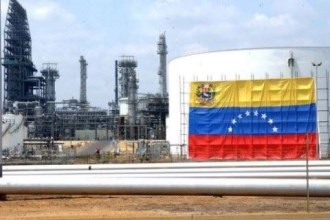
Any attempt at significantly increasing Venezuela’s oil production requires massive investments and time to modernize an infrastructure that suffered from 26 years of mismanagement during the governments of Hugo Chavez and Maduro.
“Under the Chavez-Maduro regimes, Venezuela’s oil output has collapsed due to mismanagement, mass emigration, and U.S. sanctions, with production falling from around 3 million barrels per day (mbpd) in 2005 to less than 1 mbpd in 2025—now accounting for under 1% of global supply,” said Jack Reid, Graduate Economist at Oxford Economics. “Any meaningful increase in Venezuelan oil production will take time to materialize.”
Paul Krugman, the 2008 Nobel Economic Prize laureate, says Venezuela’s official data for proven reserves was exaggerated by Chavez.
“Venezuela’s reported oil reserves tripled while Hugo Chavez was president,” Krugman wrote on his Substack account. “This increase, from roughly 100 billion to 300 billion barrels, didn’t reflect major new discoveries or exploration. Instead, it reflected the Chavez government’s decision to reclassify the country’s Orinoco Belt heavy oil as “proved” — oil that can be recovered with reasonable certainty under existing economic and operating conditions. As Torsten Slok of Apollo, who recently made this point, notes, “Much of the oil is extra-heavy, which has low recovery and a high cost to produce.” This suggests that Venezuela’s claims to have immense usable oil reserves were politically motivated hype.”
MACHADO AND DEMOCRACY
Added to the physical constraints of Venezuela’s oil infrastructure is the political uncertainty.
While an improvement of US relations with Venezuela, including lifting of US sanctions, will be welcomed by investors, the unpredictability of both US and Venezuelan policies will not provide any long-term stability.
“Political volatility will persist until a credible post-Chavista transition takes hold,” warns Dan Alamariu, Chief Geopolitical Strategist at Alpine Macro, an Oxford Economics company.
Venezuela’s opposition – led by María Corina Machado – won the July 2024 presidential elections, with 70% of the vote. Maduro had banned Machado from running so she put forward Edmundo González – a former diplomat — as the opposition candidate. Yet, Maduro refused to accept the result and continued in power until his arrest by the US on January 3, 2026.
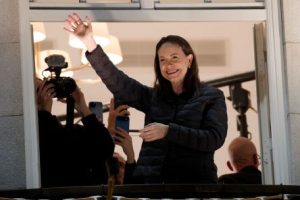
Maria Corina Machado during the Nobel Peace Prize week in Oslo, Norway. (Photo: Kevin Payravi)
Machado won the 2025 Nobel Peace Prize for her tireless work promoting democratic rights for the people of Venezuela and for her struggle to achieve a just and peaceful transition from dictatorship to democracy, the Nobel Peace Prize committee said in a statement announcing her award.
“As the leader of the democracy movement in Venezuela, Maria Corina Machado is one of the most extraordinary examples of civilian courage in Latin America in recent times,” the committee said. “Ms Machado has been a key, unifying figure in a political opposition that was once deeply divided – an opposition that found common ground in the demand for free elections and representative government.”
The Americas Society and Council of the Americas calls for a return to democracy in Venezuela. They Council of the Americas’ membership consists of leading international companies representing a broad spectrum of sectors, including banking and finance, consulting services, consumer products, energy and mining, manufacturing, media, technology, and transportation.
“Venezuela now needs investment, social peace, and rule of law, elements that over time can only be durably achieved by a legitimate, democratically elected government,” it said in a statement. “AS/COA has supported Venezuelans who have bravely fought for their country, including María Corina Machado, the winner of our 2025 Gold Medal. Their efforts, as well as those of the private sector and civil society, will be critical in the weeks and months to come.”
Ian Vásquez, Vice President for International Studies at the Cato Institute, says US support for Venezuela’s leftist government is a mistake.
“Trump has said that the United States would run the country with Delcy Rodriguez, Maduro’s vice president, until a proper transition takes place,” he says. “Doing so would be a huge mistake. Rodriguez has long been a part of the hated regime and enjoys no legitimacy among the Venezuelan people. The best way forward for the United States and Venezuela is to quickly initiate a transition to democracy with political leaders who have democratic legitimacy, rather than engage in nation-building or heavy-handed US intervention in the running of the country.”
Instead, Machado enjoys the overwhelming support of Venezuelans, as evidenced by the opposition’s landslide victory in 2024, he points out.
“Astoundingly, Trump stated that Machado does not have the support or respect of the Venezuelan people, so it would be difficult for her to govern,” Vásquez says. “Nothing could be further from the truth. She is like the Lech Walesa of Venezuela. The United States would be wise to work with Machado and her team on a swift transition to democracy and allow Venezuelans to rebuild their country. That is especially so since Machado has clearly articulated a far-reaching reform agenda to restore freedom and to modernize the country by opening the economy, privatizing the oil monopoly, deregulating, and establishing a rule of law—all policies consistent with US foreign policy goals.”
Machado has pledged an $1.7 trillion economic recovery program over a 15-year period and tripling the country’s GDP through market liberalization, privatization, macroeconomic and regulatory stability, and the return of independent institutions and rule of law.
© Copyright Latinvex
RELATED ARTICLES
Venezuela: An Ounce of Euphoria, A Ton of Uncertainty
Maria Corina Machado’s Nobel Prize Lecture
More Venezuela coverage