









|
Venezuela After Maduro: A Cautionary Note for Business
Oil executives told Trump Venezuela is 'uninvestable.' Here's what businesses need to know before the rush begins.
BY R. SHAWN HOGUE
In 1950, Venezuela was the fifth richest country in the world. Its oil wealth funded modern infrastructure, attracted European immigrants fleeing post-war devastation, and made Caracas a cosmopolitan capital rivaling any
in the Western Hemisphere. Today, former President Nicolás Maduro sits in a Manhattan jail cell awaiting trial on narco-terrorism charges, and American businesses are asking a straightforward question: Is it time to reinvest in Venezuela?
The short answer is not yet. The longer answer requires understanding what twenty-five years of authoritarian rule actually did to Venezuela and what it will take to undo it. The opportunity is real, but so are the risks. Companies that move without understanding the depth of institutional destruction may learn expensive lessons.
The Wreckage
Transparency International ranked Venezuela’s judiciary the world’s most corrupt by 2014. The superseding indictment unsealed January 3rd does not mince words: Venezuelan leaders, it alleges, ‘abused their positions of public trust and corrupted once-legitimate institutions to import tons of cocaine into the United States.’ That phrase, corrupted once-legitimate institutions, deserves emphasis. Eight million Venezuelans have fled, the largest displacement in Latin American history. Many settled in South Florida, Houston, and other American cities. GDP collapsed more than eighty percent between 2013 and 2020.
Joseph Conrad‘s Nostromo is set in fictional Costaguana, where a silver mine corrupts everything it touches. The San Tomé mine was supposed to bring stability; instead it attracted revolution after revolution, each more venal than the last. Petróleos de Venezuela, S.A. (the state oil company known as PDVSA) played exactly that role. Conrad meant allegory. Venezuela made it literal.
The January 9th White House Meeting
On January 9th, President Trump convened executives from seventeen oil companies, claiming the industry would invest ‘at least $100 billion’ to rebuild Venezuela’s infrastructure. The executives were less enthusiastic. Venezuela owes American oil companies billions. Shortly after, Trump signed an Executive Order routing Venezuelan oil revenues through U.S. Treasury accounts, blocking creditor attachment and affirming them as sovereign property in U.S. custody. The theory is that companies can transact without triggering money laundering concerns. Whether this provides permanent legal certainty that sophisticated investors require remains doubtful, but its short-term functionality may be a work of genius. The Executive Order is a temporary but important workaround, not a solution. It addresses symptom, not cause. The cause is twenty-five years of institutional rot.
What History Teaches
Venezuela needs something like denazification or de-Baathification. History suggests both urgency and caution. Consider what the Allies faced in Germany. Richard J. Evans‘s trilogy, The Coming of the Third Reich, The Third Reich in Power, and The Third Reich at War, documents how the Nazi regime colonized German civil society: judiciary, civil service, universities, professions. Courts that administered Weimar law became instruments of racial persecution. Same judges, same courtrooms, radically different principles. The Allies established 545 denazification tribunals and processed 900,000 cases. Yet by 1948, sixty to seventy percent of judges in the U.S. Zone were former Party members. Governance demanded professionals. Evans shows denazification worked through strategy, not thoroughness: removing leadership cadres while rehabilitating lower functionaries. I hope the same can be done in Venezuela.
The darker possibility, the one that haunts history, is what Timothy Snyder describes in Bloodlands: totalitarian regimes that hollow institutions out entirely, replacing professional norms with personal loyalty, bureaucracies with patronage networks. When occupiers withdrew from Eastern Europe, they left populations that had forgotten how legitimate governance worked. Eight million Venezuelan emigrants, including doctors, lawyers, engineers, and judges, carried that knowledge with them to Miami, Madrid, and Bogotá. The professional class that might staff a successor government may already be exiled. Iraq shows the opposite failure. Paul Bremer’s orders dissolved the military and banned Baathists from public employment. Four hundred thousand soldiers found themselves jobless overnight. The International Center for Transitional Justice concluded these orders created the insurgency.
Venezuela must thread between German under-enforcement and Iraqi excess. Call this process deBolivarification. Chavismo was kleptocratic, not ideological. Bolivarian rhetoric legitimated theft of resources and the abandonment of private property. Unlike Baathism, it built no parallel structures; it simply hollowed existing ones. Germany retained a professional class to rehabilitate. Iraq retained structures to repurpose. Venezuela is blessed with both.
What This Means for Business
This institutional vacuum generates significant compliance risk American businesses will face.
Sanctions. The sanctions architecture remains intact because institutional transformation has not occurred. The Office of Foreign Assets Control (OFAC) designated additional shadow fleet vessels in December 2025. All designations against PDVSA stand. General License 5T takes effect February 3rd, 2026. Presidential promises are not OFAC authorization.
Money Laundering Exposure. The conditions that the Financial Crimes Enforcement Network (FinCEN) flagged, including shell companies, South Florida real estate, and cryptocurrency transactions, reflect corruption that outlasts any single president. The Financial Action Task Force (FATF) grey-listed Venezuela in June 2024. Until Venezuela rebuilds financial regulatory capacity, every transaction carries exposure.
Foreign Corrupt Practices Act. FCPA risk is acute. Current government leadership includes designated narcotics traffickers. In my years advising clients on Latin American transactions, I have seen compliance systems fail not because companies lacked good policies but because counterparties operated in environments where corruption was the baseline. When professional norms yield to personal loyalty, corruption becomes the operating system.
Debt and Creditor Rights. Venezuela owes between $150 and $170 billion, roughly double its GDP. A Delaware court approved selling Citgo’s parent to Elliott-backed Amber Energy for $5.9 billion; appeals are pending and OFAC must approve. Judgments are only worth what enforcing courts are worth.
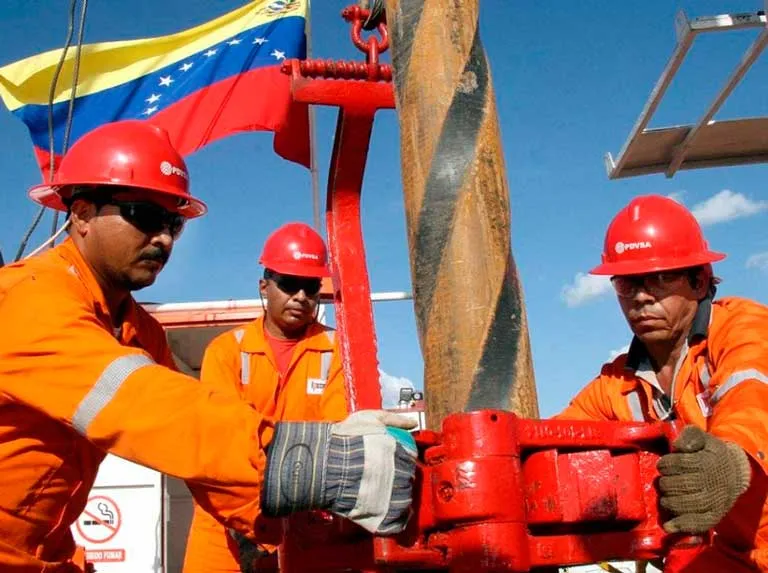
Energy Investment. Venezuela holds 303 billion barrels in reserves, but production collapsed from 3.5 million barrels daily in the 1980s to 900,000 today. Rystad Energy estimates $53 billion to maintain current output, $183 billion to restore historic levels.
Workforce. The administration terminated Temporary Protected Status (TPS) for Venezuelans on January 6th, 2025. Approximately 600,000 held TPS, many working in construction, hospitality, and healthcare throughout South Florida and Texas. Companies relying on Venezuelan workers should audit I-9 compliance.
The Constitutional Problem
The 1999 Constitution guarantees healthcare, education, and environmental protection across 350 articles. Like the Soviet constitution, Venezuela’s meant nothing in practice. Chávez packed the Supreme Tribunal. Twenty magistrates became thirty-two by 2004. When the opposition won the National Assembly in 2015, the court declared it in contempt and assumed legislative powers itself. Gabriel García Márquez‘s Autumn of the Patriarch depicts a Caribbean dictator reshaping reality by decree. Critics called it magical realism. Venezuela’s Supreme Tribunal transferring legislative power to itself is magical realism without the magic. At least García Márquez’s patriarch was fictional. As Zachary D. Kaufman, Professor of Law and Director of the Initiative on International Law at the University of Florida Levin College of Law, states, “Venezuela’s lengthy constitution is written boldly. However, because of the Venezuelan government’s unwillingness and inability to uphold its own rule of law, the country’s supposed legal protections have proven to be much more idealistic than realistic, more dreamed than defended.”
DeBolivarification must therefore be constitutional. Foro Penal, the Venezuelan human rights organization, counts over 800 political prisoners requiring release. The colectivos, the armed gangs that enforced Chavista rule, must be disarmed. The constitution needs replacement, not amendment. Until an independent judiciary is reconstructed, no Venezuelan contract can be presumed enforceable.
The Bottom Line
At the end of Nostromo, Conrad’s province achieves independence from corrupt Costaguana, and immediately, a new cycle of exploitation begins. Maduro’s removal was necessary. It is nowhere near sufficient. The Treasury account structure may address some industry concerns, but real regulatory changes must occur before companies can comfortably take action. Venezuela was the fourth richest country in the world less than a century ago. The road back will be neither short nor straight, but if it is to succeed it will be because foreign investment has Washington’s security protection behind it and draws on the collective genius of displaced Venezuelans living in diasporas worldwide. Some of those Venezuelans still languish as political prisoners, enemies of the Bolivarian “revolution.” Their release will be the first test of whether reconstruction is real.
Shawn Hogue is an attorney that practices complex commercial litigation in Miami and received the Miami-Dade Bar Association’s “Best Business Litigator” award in 2024. He has taught constitutional law as an adjunct professor at Florida International University. He attended law school at the University of Miami, holds an M.A. in History from Emory University, and did his postgraduate fellowship at the University of Oxford.
© Copyright Latinvex
RELATED ARTICLES
Venezuela After Maduro: No Quick Recovery
Venezuela: An Ounce of Euphoria, A Ton of Uncertainty
Maria Corina Machado’s Nobel Prize Lecture
More Venezuela coverage