









|
USMCA Negotiations: US, Mexico Objectives
Key issues for the U.S. will center on changes to the USMCA rules of origin.
BY DAVID A. GANTZ
While the 2026 United States-Mexico-Canada Agreement (USMCA) review is scheduled for July 1, working-level discussions between the U.S. and Mexico began in mid-March and ministerial-level negotiations on May 27. Despite extensive positioning on social media, U.S.-Canada negotiations remain at a preliminary stage.
This summary of U.S. objectives focuses on the U.S.-Mexico relationship and is based on public statements by the principal negotiator, U.S. Trade Representative Jamieson Greer, and other U.S. officials. However, it may be incomplete since the negotiations are confidential, and U.S. positions are subject to change.
While President Donald Trump has occasionally suggested withdrawing from the USMCA, observers view such a move as unlikely. Nevertheless, the outcome of the July negotiations and the future of the USMCA remain uncertain.
UNITED STATES’ OBJECTIVES
Automotive Sector
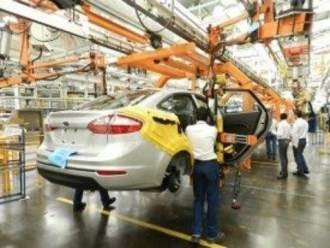
Key issues for the U.S. will center on changes to the USMCA rules of origin, particularly in the automotive sector, consistent with the extralegal rules imposed on Mexico and Canada in 2025, which aim to:
- Increase U.S.-based manufacturing in the auto and machinery sectors.
- Decrease manufacturing reliance on Mexico and Canada.
- Reduce dependence on third country inputs.
Such changes may mirror previous U.S. departures from USMCA standards, including the 50% tariffs on steel, aluminum, copper, and related downstream products already imposed on Mexico and Canada. Tariffs of 25% on autos — whether or not they meet current rules-of-origin requirements (with a credit for U.S. content) — are likely to continue regardless of their consistency with the USMCA rules.
Concerns About China
Chinese exports to and investments in Mexico will continue to affect these negotiations, given that U.S. policymakers across the spectrum view Beijing’s expanding global influence as a primary strategic challenge, often raising national security issues. The U.S. has already asked Mexico to monitor Chinese investment in Mexico — this is a point of friction as official Mexican government figures put the total at less than $3 billion, while independent experts’ estimates are much higher. The focus will be on sensitive sectors ranging from autos and auto parts to chips, through a new investment screening mechanism. The U.S. will likely also demand controls on “transshipment,” an amorphous concept that, in this context, focuses on Chinese actions such as shipping Chinese steel to the U.S. via Mexico to avoid U.S. tariffs. However, it may also affect Chinese production of goods in Mexico, such as laptop computers, where the Chinese materials content remains high.
U.S.-China tension puts Mexico in a difficult position. China is Mexico’s second largest trading partner and, under normal circumstances, Mexico would welcome more Chinese-sourced investment, particularly as new investment from other sources has stalled. Mexico’s recent tariff increases on non-free trade agreement (FTA) partners — including 50% duties on autos from China, South Korea, and many Southeast Asian nations — aligned with Trump administration goals but drew strong objections from China.
Other Key Negotiating Priorities
Beyond broader trade frameworks, the 2026 review will address several other issues central to the U.S. negotiating agenda:
- Labor standards and wage disparity: There is growing bipartisan consensus that improving Mexican worker’s rights — specifically regarding collective bargaining and the recognition of independent unions — is essential. By increasing real wages in Mexico, U.S. policymakers aim to reduce the substantial hourly wage disparities between the two nations.
- Rapid response mechanism (RRM): The U.S. continues to push for expansion of labor protections for Mexican workers via the rapid response mechanism. The RRM is a tool that the U.S. government can use to enforce obligations of individual enterprises to comply with USMCA labor standards such as collective bargaining and the formation of independent unions, with the threat of trade sanctions for non-compliance.
- Environmental protection and energy policy: Negotiations will also address stronger environmental protections, alongside the U.S. opposition to Mexico’s return to state-run energy monopolies. The U.S. maintains that the statist oil and electricity policies of Presidents Claudia Sheinbaum and Andrés Manuel López Obrador violate USMCA trade commitments.
Possibilities for Cooperation
On the more positive side, cooperation seems probable on e-commerce, rare earth mineral development — more practical with Canada than Mexico — and possibly artificial intelligence (AI). How far the U.S. wants to go on AI, beyond general platitudes, is uncertain. True cooperation on critical minerals is likely to be problematic unless and until the Sheinbaum administration opens lithium mining opportunities to the private sector, reversing the López-Obrador decision four years ago to nationalize the deposits and put them under the authority of an inactive state-owned agency, Litio para Mexico (LitioMx).
The U.S. and Mexico share an interest in strengthening regional supply chains, which have been strained by recent U.S. tariff policies but could still be improved in the review.
MEXICO’S APPROACH
Mexico’s key objectives can be summarized as “First, do no more harm.” Some 80% of Mexico’s exports to the U.S., most of those that meet current USMCA rules of origin, enter the U.S. duty-free. With other key exports, such as autos and auto parts, steel, aluminum, and copper, which are subject to 25%–50% tariffs, the hope is for better tariff treatment. Eliminating the U.S. tariffs is likely off the table, but it may be possible to negotiate tariff rate quotas, whereby a volume of such goods enters the U.S. duty-free or at a low rate of duty (possibly 10%–15%); once that quota is filled the duties would revert to the current 25%–50% level. Relief is particularly critical for the auto and auto parts industry. At present, autos made in the EU, Japan, and South Korea enter the U.S. at a 15% tariff, while the same vehicle produced in Mexico could face duties of up to 25% — depending on its U.S. parts content. This disparity provides no clear benefit to either U.S. auto producers or the Mexican or U.S. economies. (Autos assembled in those countries seldom incorporate any significant U.S. parts content.)
Outlook for Stability
For business interests in all three USMCA countries — particularly small and medium-sized enterprises — greater predictability and a reduction in policy uncertainty are essential prerequisites for expanding investment and workforce hiring. Ideally, the USMCA negotiations would establish fixed tariff levels and regulatory frameworks for a multiyear period. However, current geopolitical pressures make such an outcome unlikely for three primary reasons:
- Policy volatility: The America First trade policies of the Trump administration have undergone frequent revision over the past 16 months. This trend of rapid, unpredictable change is expected to continue, leaving businesses with little warning regarding significant shifts in trade regulations.
- Negotiation deadlocks and issue linkage: There is a high possibility that the July USMCA review will fail to produce agreement on a new text. Formal negotiations would then be postponed until July 2027, while informal talks between the U.S. and Mexico would likely continue well into this fall, possibly expanding to include non-trade issues such as migration, narcotics production and related violence, border security and the prosecution of corrupt officials.
- Institutional erosion and investment risks: Mexico’s shift under Presidents López Obrador and Sheinbaum toward a more centralized, single-party governance model has weakened the rule of law. This institutional regression has eroded the confidence of many foreign investors concerned about long-term stability and legal certainty.
David A. Gantz is Will Clayton Fellow in Trade and International Economics at Rice University’s Baker Institute for Public Policy.
This commentary is based on remarks made at the U.S. Country Outlook conference held in Mexico City on April 28, 2026, sponsored by Rice University’s Baker Institute for Public Policy, México, ¿Cómo Vamos?, and Consejo Mexicano de Asuntos Internacionales (COMEXI). A similar version was published by México, ¿Cómo Vamos?.
This publication was produced by Rice University’s Baker Institute for Public Policy.
Republished with permission from the author.
© 2026 Rice University’s Baker Institute for Public Policy
More USMCA Coverage