









|
Suriname’s Offshore Transformation
The country is forecast to grow by about 55 % in 2028.
BY PETER BAUMGAERTNER
AND JACK EMERSON
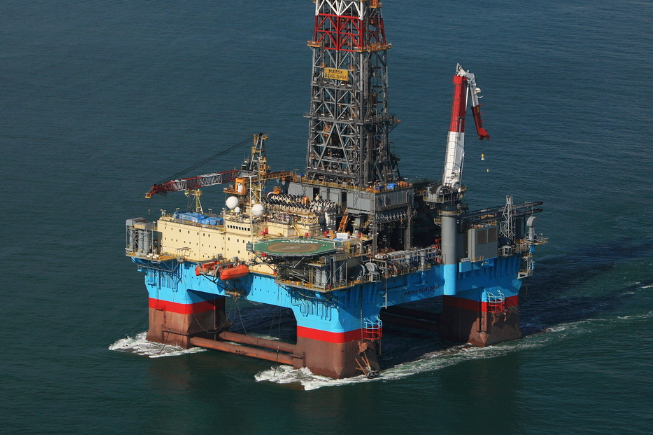
Suriname is rapidly transitioning from a steady and stable onshore oil producer into a significant offshore petroleum nation. For four decades, the country’s oil industry consisted of little more than three onshore fields operated by the state company Staatsolie. That changed in 2020, when the Maka-1 well struck oil in Block 58, kicking off a transformation that has pulled Suriname into the center of the global energy conversation.
The scale of what lies beneath Suriname’s waters is hard to overstate. International oil companies have confirmed offshore reserves of roughly 2.4 billion barrels of oil equivalent, resources under the exclusive concession authority of Staatsolie, the state enterprise handling everything from exploration to refining, to electricity generation. All hydrocarbons within Suriname’s borders belong to the state by law, and Staatsolie’s legal foundation rests on the Constitution, the Mining Decree, the Petroleum Law and a model production-sharing contract used in the offshore deals. Suriname’s cut will come through royalties, profit oil and taxes, and officials have floated tax incentives to speed up gas exploration.
Nowhere is Suriname’s ambition more visible than in Block 58, home to the flagship GranMorgu project. TotalEnergies operates the venture with a 40% stake, matched by APA Corporation, while Staatsolie holds the remaining 20%. The companies sanctioned the project in October 2024: Sapakara South and Krabdagu, the fields anchoring GranMorgu, hold an estimated 750 to 760 million barrels of recoverable oil, set to flow through a floating production, storage and offloading vessel capable of 220,000 barrels per day. Meanwhile, the price tag is roughly $10.5 billion for a project designed to run 20 to 25 years and generate between $16 to $26 billion for the Surinamese government. As of mid-2026, Saipem has begun offshore subsea work under a $1.9 billion contract, and the FPSO is reportedly about halfway built, engineered for zero routine flaring and full reinjection of associated gas.
GranMorgu, though, is only the headline act. Malaysia’s PETRONAS has assembled its own portfolio in Block 52, with three discoveries: the Sloanea gas field in 2020; the Roystonea oil in November 2023; and the Fusaea oil-and-gas in May 2024. Late last year, PETRONAS and Staatsolie declared Sloanea commercial, Suriname’s first formal step toward gas production, and a floating LNG facility is now planned, targeting first gas by 2030. Combined, Roystonea and Fusaea are believed to hold around 400 million barrels of oil equivalent, and in June 2026, Suriname’s President Jennifer Geerlings-Simons confirmed another PETRONAS find in the same block. Around half of the country’s offshore acreage is already licensed, roughly half the basin is mapped with 3D seismic data, and TotalEnergies has expanded further with production-sharing contracts in the shallower Blocks 6 and 8. Staatsolie is also running an open-door licensing round covering more than 70,000 square kilometers, drawing interest from other major oil and gas companies.
DRAMATIC GROWTH
The numbers matter because Suriname’s economy is small enough that they change everything. With a population of roughly 600,000 and a GDP of $3 to 4 billion, the country is forecast to grow by about 55 % in 2028, the year GranMorgu is expected to deliver its first oil. That kind of growth would be transformative for a nation that defaulted on its foreign debt in 2020 and had to turn to the IMF for a rescue package. Staatsolie has made local content a stated priority, projecting $1 billion or more in domestic investment over the life of GranMorgu alone.
If Block 58 and Block 52 represent the substance of Suriname’s transformation, the Suriname Energy, Oil and Gas Summit, or SEOGS, held in June 2026, was where that transformation was put on full display. With Staatsolie as the lead host and sponsor, the summit proved crucial, not simply as a showcase of Suriname’s progress, but as the moment the country stepped forward as an emerging anchor of Caribbean and Latin American energy development. Officials and executives converged in Paramaribo to argue that Guyana, Suriname, and Trinidad and Tobago, sitting atop one of the fastest-growing hydrocarbon basins on the planet, could offer the Caribbean something it has never had: energy security supplied from within its own neighborhood. Jamaican Prime Minister Andrew Holness put it plainly, telling the summit that the region “holds world class resources that open an opportunity we have never had before.”
SEOGS served as a venue for formalizing precisely that kind of cooperation. On its sidelines, the Energy Chamber of Trinidad and Tobago and the Suriname Energy Chamber signed a memorandum of understanding covering local content, investment promotion, and knowledge transfer. Suriname’s Oil Minister Patrick Brunings, confirmed plans for a joint technical team with Guyana to evaluate shared gas resources and infrastructure options, a step that could eventually connect the two countries’ offshore fields into a single regional gas strategy. Trinidad and Tobago’s Energy Minister Ernesto Kesar, argued for a pragmatic dual-track approach that keeps fossil fuels and renewables in play, noting that global energy demand is outpacing the transition away from oil and gas.
The summit also positioned Suriname against its regional peers. Guyana remains the undisputed leader, with output from its Stabroek Block now topping 900,000 barrels per day. Trinidad and Tobago brings decades of gas and LNG expertise. Suriname is still in its development phase, banking on its first oil in 2028 and first gas by 2030, with a second oil development expected not long after. Barbados, Jamaica and Grenada remain earlier-stage prospects. Financing was a recurring theme, with delegates examining the role U.S. commercial banks, export credit agencies and development finance institutions might play in absorbing currency risk and unlocking capital for a young market. The $527 million loan the U.S. Export-Import Bank extended for Guyana’s gas-to-energy project was cited repeatedly as the model Suriname hopes to replicate.
None of it, officials were careful to note, comes without responsibility. Minister Brunings described Suriname’s trajectory as an acceleration toward what he called “Suriname 3.0,” a vision that pairs incoming investment with sustainability and environmental stewardship. As PETRONAS Vice President Mohd Redhani Abdul Rahman observed at the summit, the event has “quickly evolved into a premium platform” for the region’s broader energy dialogue.
What remains is the harder work of building infrastructure to match the ambition. Suriname currently has to improve its offshore production infrastructure, meaning pipelines, platforms and processing facilities must be built. Appraisal drilling results, reservoir connectivity and the durability of the country’s fiscal and regulatory framework will determine whether Suriname can convert billions of barrels of confirmed reserves into a functioning, revenue-generating industry. The reserves are proven. The financing is materializing. What Suriname needs next is the physical infrastructure and institutional capacity to get the oil and gas out of the ground and onto the market.
Peter Baumgaertner is a Partner at Holland & Knight. Jack Emerson is a Summer Associate at Holland & Knight.
© Copyright Latinvex