










|
Planning the Cross-Border Deal Timeline
Practical lessons for Latin American transactions.
BY JOSELINE RODRIGUEZ
Every acquisition or divestiture eventually turns on the same question: when can we close? In my experience advising on Latin American transactions, the answer is rarely the date the business first has in mind. Ideally, that date should be tested before the letter of intent (LOI) is signed. In practice, that almost never happens. More often, the timetable is set first and tested later, when changing it is far more costly. That early conversation should cover regulatory and other approvals, financing, sector-specific requirements and the political climate in each relevant jurisdiction.
Once counsel starts mapping the structure, the required approvals and the remaining steps to closing, it often becomes clear that the transaction will take longer than expected. The deal is no less viable for that; the timetable simply has to reflect the work.
On these deals, I work alongside the client’s business and legal teams and local counsel in each jurisdiction to test the proposed structure and build a timetable that holds up. Local counsel brings something that the deal team cannot replicate from abroad: current knowledge of agency practice and how regulators are applying the rules. Energy transactions illustrate the point well, because merger control clearance and permit or concession approvals often run as parallel workstreams before different authorities. The lessons below, however, apply across sectors and across the region.
Understand why the closing date matters
Start by finding out what is driving the deadline. Is the seller trying to complete a divestiture before year-end to free up capital or reduce debt? Does the buyer need the acquisition to close in a particular reporting period to boost earnings, or to secure entry into a new market? Counsel need not second-guess the financial strategy, but they do need to understand it well enough to tell the client what a one-or two-month delay would mean commercially.
Before anyone commits to a closing target, the client’s teams, local counsel and I work through the likely approvals, the information each will require and any structural issues. That review covers corporate approvals, third-party consents (including change-of-control consents under material contracts), financing conditions, sector-specific timing and local considerations that could affect execution. Where key facts are still missing, we say so plainly and identify what must be confirmed before we can give a reliable estimate.
Keep the regulatory assessment current
Latin America’s regulatory landscape has shifted considerably in recent years, and a change of government can bring new sector priorities, new agency leadership and new procedures. The question for a deal team is narrower: do any of these change the requirements or assumptions for this transaction?
Mexico offers a clear example. Under reforms adopted in 2025, the newly created National Antitrust Commission (Comisión Nacional Antimonopolio) took over the competition functions of the Federal Economic Competition Commission (COFECE), and a new National Energy Commission (CNE) now handles electricity permitting. Confirm both the competent authority and the applicable rules before relying on an earlier analysis.
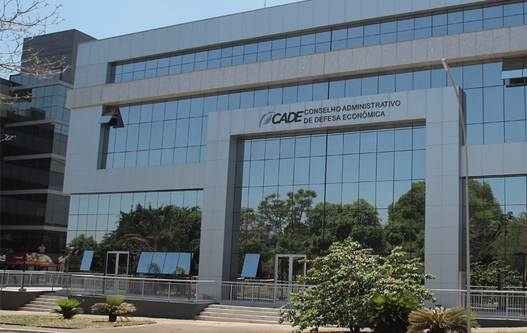
Local counsel is also essential in separating rules in force from proposals still under discussion, and in flagging developments to watch through closing. For example, in September 2026, Brazil’s Administrative Council for Economic Defense (CADE) opened a public consultation on proposed changes to its merger notification rules; those changes are not yet in force. When a relevant reform is pending, the parties should consider how it could affect the structure, the timetable and the closing conditions, and revisit the timing estimate if the reform advances.
Gather information beyond the buyer and target
A recurring question in merger control is whose revenues and assets count toward the filing thresholds. The answer often reaches well beyond the buyer and the target, extending to other companies in each corporate group, including subsidiaries that are not part of the deal.
Costa Rica is a good example in Central America. Its regime looks at local sales or productive assets under both combined and individual tests, and the competition authority’s guidance addresses how the relevant economic group is defined. Brazil likewise applies its turnover thresholds at the economic-group level. The rules on which entities and figures to include vary from one jurisdiction to the next.
The practical answer is to request group structure charts and country-by-country financial data at an early-stage. With local counsel’s analysis of the applicable rules in hand, the deal team can identify which affiliates must be included and agree with the client on who will collect the information. Otherwise, deal counsel may be ready to run the filing analysis while still waiting on figures from group companies that sit entirely outside the transaction perimeter.
Nor does the absence of an obvious horizontal or vertical overlap settle the filing question. Jurisdictional thresholds and the substantive competition analysis are separate questions, and each must be addressed.
Review energy approvals separately
In an energy acquisition, start with the assets and activities being acquired. An operating power plant, a supply business and a development-stage project can each raise different approval questions. Review the relevant permits and concessions, including any change-of-ownership or change-of-control provisions, against the proposed deal structure.
In Mexico, the CNE’s rules require authorization before an assignment of a generation permit takes effect. An assignment of the permit itself and a change in ownership of the permit holder are different events, so counsel must determine precisely which requirements the chosen structure triggers. In Brazil, the National Electric Energy Agency (ANEEL) lists transfers of corporate control among the matters requiring its prior consent. In both countries, the analysis must be run against the specific activity and authorization involved.
Prepare a short regulatory approvals matrix setting out, for each approval, the authority, the required documents, the responsible team and whether clearance is a condition to closing. Include any foreign investment restrictions or authorizations. If the transaction also has a U.S. nexus, assess Hart-Scott-Rodino (HSR) Act premerger notification requirements and any national security review by the Committee on Foreign Investment in the United States (CFIUS) separately.
Allow time for preparation as well as review
When discussing timing with the business, budget for preparing the filing and responding to the authority’s questions, not just the statutory review period. The published period rarely captures the full time to approval. Mexico’s merger procedure, for instance, allows the authority to request missing and additional information.
Run approvals, financing, corporate authorizations and closing documents off a single working timetable, built with local counsel so that their view of filing requirements and review periods lines up with everything else needed to close. Identify which workstreams can run in parallel and agree who owns each.
Energy deals also show why regulatory clearance and closing readiness must be tracked together. In a recent acquisition of major power generation assets in Mexico that I advised on, the regulatory filings were ready weeks ahead of schedule, but the financing took longer than anticipated. Confirm that financing commitments, including any commitment letter expiration dates, will remain available through the expected closing date, and flag to the business promptly when a material assumption changes.
Build timing risk into the deal documents
The LOI discussion should identify the approvals likely to drive timing and test whether the proposed exclusivity period leaves enough room for diligence and negotiation of definitive documents. The detailed risk allocation will come later, in the acquisition agreement, but significant gaps in expectations should be flagged at the LOI stage.
The agreement should specify who makes the filings, who leads discussions with regulators and what cooperation each party owes, so that no time is lost after signing. It should also address how far the buyer must go to obtain clearance, because a regulator’s request for remedies can add months to the review.
Set a realistic outside date, after which either party may terminate if closing has not occurred, and consider automatic extensions for approvals still pending.
A realistic path to closing
A target date becomes a workable plan only when the business objectives, the deal structure and the steps to closing are considered together. In Latin America, that means weighing approvals alongside financing, sector-specific timing and developments in each jurisdiction, with everyone on the deal working from the same assumptions.
Done early, this work shows the parties what is achievable within the desired timeframe, where they will need flexibility and how responsibilities and risks should be allocated in the agreement. The parties should agree on the path to closing and the assumptions behind the target date. A closing date built that way is one the business can actually plan around.
Joseline Rodriguez is a partner with DLA Piper in Miami. She wrote this overview for Latinvex.
© Copyright Latinvex