









|
Latin America: The Next Investment Grade Countries
Business groups express support for USMCA in letter to USTR.
BY LATINVEX STAFF
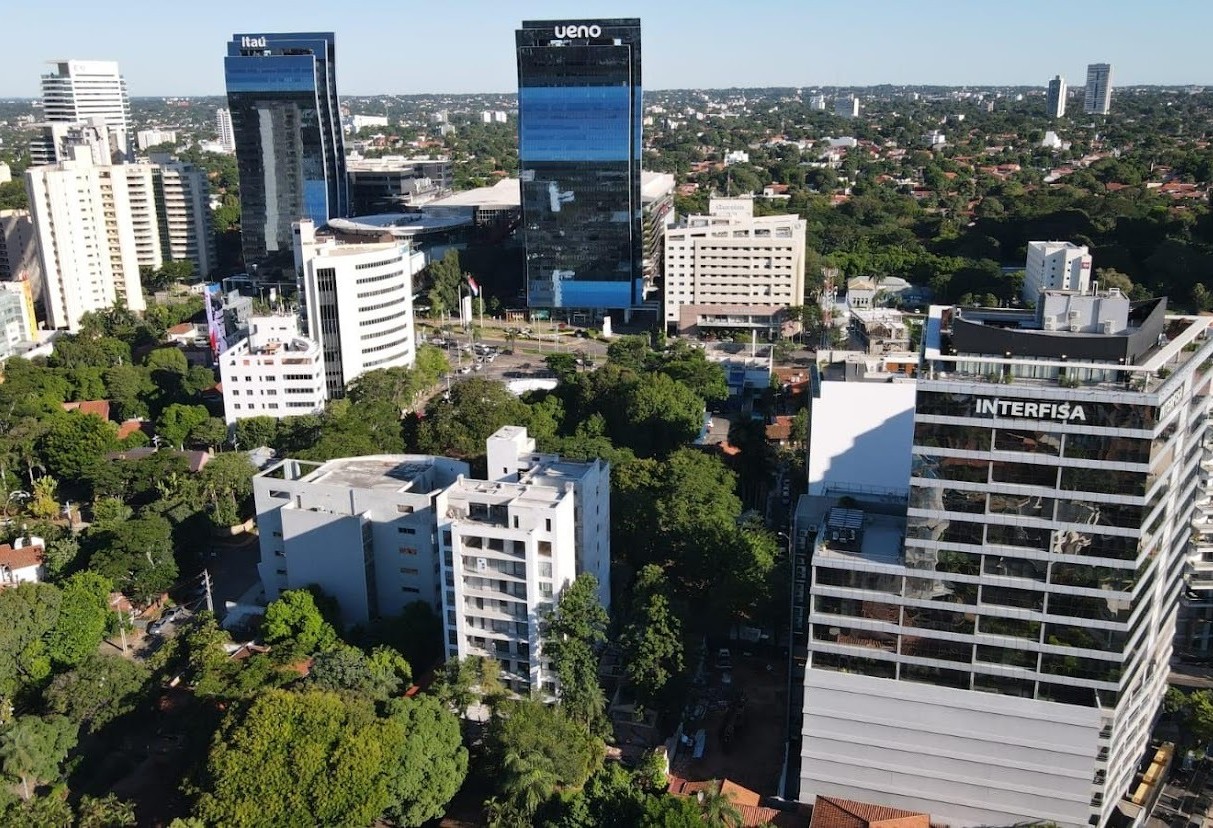
Costa Rica, Dominican Republic, Guatemala and Paraguay are all candidates for upgrades to investment grade, but still need to overcome challenges such as stronger growth, improved governance, and deeper revenue bases and local funding flexibility, Fitch Ratings says.
As of today, only Mexico, Chile, Peru, Panama and Uruguay have investment grade in Latin America. Brazil lost its investment grade a decade ago and is not seen as getting much closer to regaining it for now.
“Paraguay’s investment-grade prospects are presently the best,” Fitch says. “The Positive Outlook on its ‘BB+’ rating reflects the potential for higher investment-led growth and reforms to fortify its strong fiscal profile, though these are not assured.”
Meanwhile, Guatemala’s (BB+/Stable) and Costa Rica’s (BB/Positive) investment-grade prospects will depend on institutional improvements and strong growth, which may be hard for them to deliver, the ratings agency warns.
And the Dominican Republic (BB-/Positive) has the steepest climb to investment grade, hinging on reforms to improve fiscal metrics, budget flexibility and the policy framework.
“For all four ‘rising stars’, growth has been favorable,” Fitch says. “But faster growth would enhance their investment-grade prospects, and its quality matters in terms of social development, formalization, and tax revenues. Governance is a constraint, and breakthroughs on some specific reforms will be important in our institutional assessment.”
500 US BUSINESS GROUPS SUPPORT USMCA
More than 500 business and agriculture organizations and chambers of commerce from across the United States wrote a letter to the US Trade Representative expressing continuing support for the U.S.-Mexico-Canada Agreement (USMCA).
“While a number of important compliance issues require greater attention and remediation through the “joint review” now under way, USMCA remains critical to our economic future because it preserves and strengthens U.S. trade ties to Canada and Mexico,” the letter said.
Signatories include the U.S. Chamber of Commerce, the Business Roundtable, the National Association of Manufacturers, the National Retail Federation and the American Automotive Policy Council.
“More than 13 million American jobs depend on trade with Canada and Mexico,” the business groups said. “U.S. manufacturers export more made-in-America manufactured goods to our North American neighbors than they do to the next 12 largest export markets combined, and the two countries account for one-third of U.S. agricultural exports. They are also the top two export destinations for U.S. small and medium-size businesses, more than 100,000 of which sell their goods and services to Canada and Mexico. USMCA ensures U.S. manufacturers, farmers, and service providers can continue to access the Canadian and Mexican markets. It guarantees that virtually all U.S. exports enter these markets tariff-free and helps American companies and the workers they employ compete in our top two export markets.”
FRANK GEHRY’S LATIN AMERICA LINK
Noted Canadian-American architect Frank Gehry has passed way, aged 96.
While Gunnenheim Museum in Bilbao, Spain was his most-known work, Gehry also had ties to Latin America, specifically Panama.
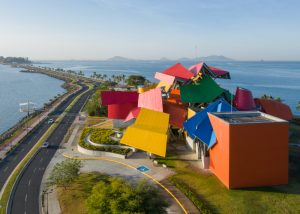
The Museum of Biodiversity lies on the socalled Causeway in Panama’s capital Panama City, just by the Pacific entrance to the Panama Canal. (Photo: Biomuseo)
He designed the Biomuseo (Museum of Biodiversity), which lies at the entrance of the Panama Canal. The museum – which opened in 2014 — was Gehry’s first work in Latin America.
The building is designed to tell the story of how the Isthmus of Panama emerged from the sea, connecting two continents, splitting a great ocean in two and changing the biodiversity of the planet forever. It exhibits, designed in consultation with scientists at the Smithsonian Tropical Research Institute, which is also based in Panama, within walking distance from the Biodiversity museum.
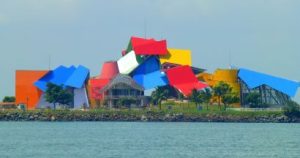
Frank Gehry used vibrant colors and irregular shapes to reflect Panama’s natural diversity. (Photo: F Delventhal)
Gehry used vibrant colors and irregular shapes to reflect Panama’s natural diversity. The building features an open-air public atrium covered by colorful metal canopies to protect visitors from frequent rainfall.
The museum wasn’t Gehry’s only link to Panama. Berta Aguilera, his wife the past 50 years, is a Panamanian businesswoman.
WORLD’S BEST RESTAURANTS
Ten restaurants in Latin America made this year’s “World’s 50 Best Restaurants” list from UK-based William Reed. Peruvian capital accounted for four, Mexico City two, Argentina’s capital one, with Chile’s Santiago, Brazil’s Rio de Janiero and Colombia’s Cartagena rounding out the rest.
Maido in Lima was ranked first. Chef-restaurateur Mitsuharu ‘Micha’ Tsumura combines Japanese techniques and Peruvian ingredients into Nikkei cuisine.
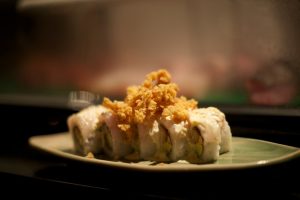
A dish from Maido in Lima, ranked as the world’s best restaurant by Best50. (Photo: Lindblom)
Quintonil in Mexico City was ranked third, winning praise for chef Jorge Vallejo’s boundary-pushing Mexican cuisine and his wife Alejandra Flores’ exceptional hospitality.
Kjolle in Lima was ranked ninth. It was founded in 2018 by former Central head chef Pía León.
Don Julio in Buenos Aires ranks tenth. “Some 25 years after owner-sommelier Pablo Rivero opened his neighbourhood steakhouse on a corner of Palermo, he is still serving some of the best beef cuts, local wines and authentic Argentine hospitality you can find anywhere,” 50 Best says in its review.
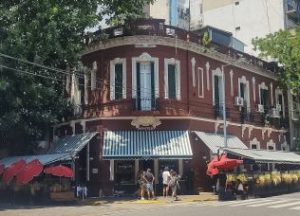
Steakhouse Don Julio in the Palermo area of Argentine capital Buenos Aires ranks among the world’s ten best restaurants, according to Best50. (Photo: Roberto Fiadone)
Boragó in Santiago ranks in 23rd place. The restaurant has become a haven for chef Rodolfo Guzmán’s discovery of, and research into, native Chilean produce.
Mérito in Lima ranks in 26th place. Combining produce from the surrounding area with flashes and memories of his country of origin, chef Juan Luis Martínez unites the cuisines of Peru and his native Venezuela.
Lasai in Rio de Janeiro ranks in 28th place. “With exceptional, vegetable-led dishes from chef Rafael Costa e Silva and warm, welcoming hospitality led by his wife, Malena Cardiel, Lasai has all the ingredients of a standout restaurant,” Best50 says.
It has featured in Latin America’s 50 Best Restaurants every year since its opening a decade ago and achieved the accolade of The Best Restaurant in Brazil 2024. In 2025, it makes its long-awaited debut on The World’s 50 Best Restaurants list.
Mayta in Lima ranks 39th. “Chef Jaime Pesaque’s refined Peruvian cuisine now draws diners from all over the globe,” 50Best says.
Rosetta in Mexico City ranks 46.
Celele in Cartagena ranks 48. Chef Jaime Rodríguez spent years exploring the Caribbean coast of Colombia with former restaurant partner Sebastián Pinzón, meeting Indigenous people, discovering new flavours and ingredients and documenting recipes that were in danger of being lost. This research project, called Proyecto Caribe Lab, continues to inform the restaurant’s concept today, now led by Chef Rodríguez alone.
© Copyright Latinvex