









|
Congress & Democrats: More Latin America Focus
Latin America will likely receive greater congressional scrutiny.
BY MICHAEL SHIFTER
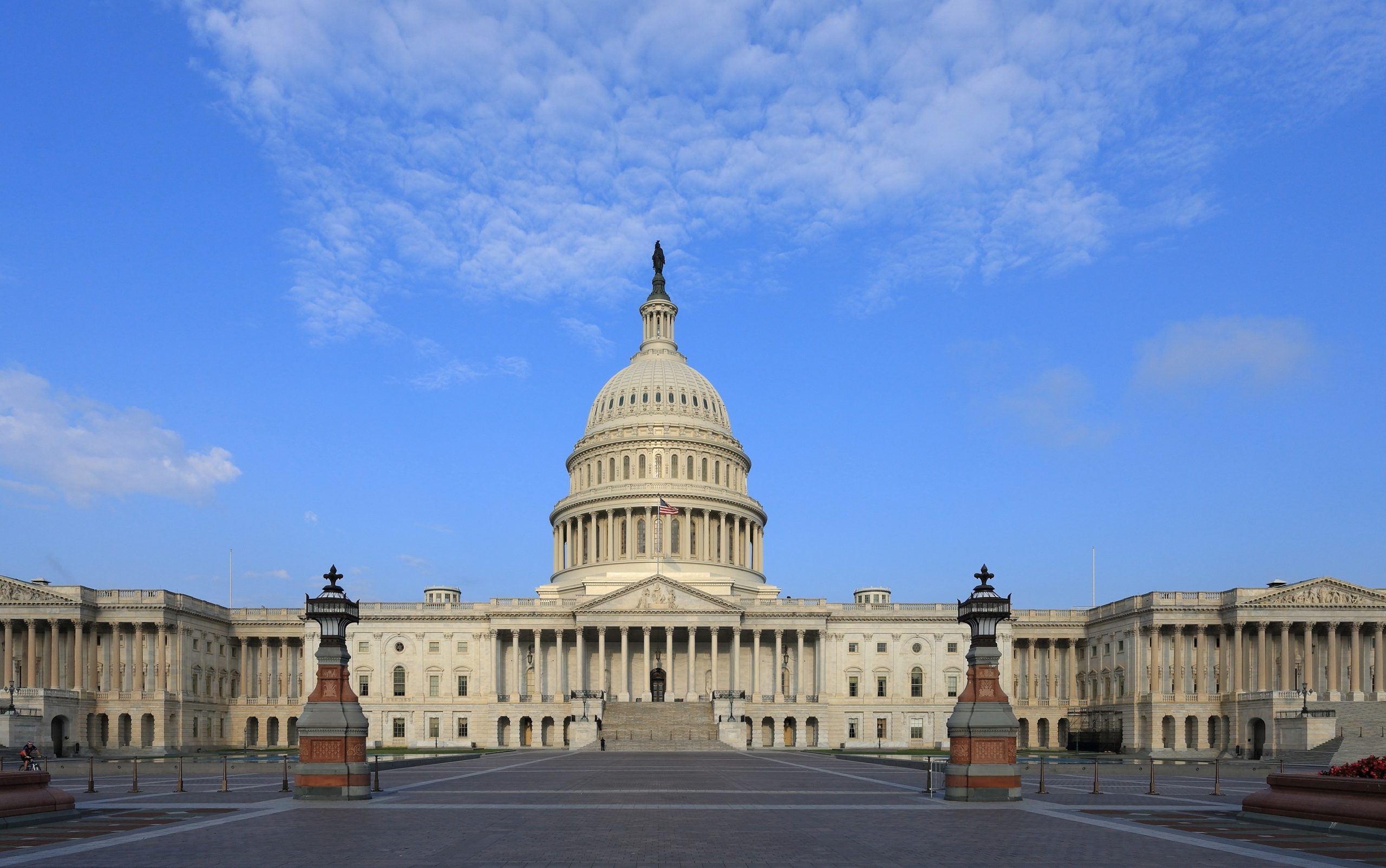
For the first two years of Donald Trump‘s second term, a compliant Republican-controlled Congress largely acquiesced in the president’s sweeping exercise of executive power. The Democrats’ decisive victory in the November 3 midterm elections has dramatically altered that political landscape. When the new Congress takes office in January, Trump will face a far more assertive legislature, determined to challenge his administration and hold it accountable.
Democrats are expected to focus on affordability and corruption, two issues that contributed to their historic midterm victory. Trump, meanwhile, will continue to govern through executive actions and fiercely resist congressional efforts to constrain his power. Legislative accomplishments will be limited. With 56 Senate seats, Democrats will probably lack the 60 votes needed to overcome a filibuster on most legislation, as well as the two-thirds majority needed to override a presidential veto.
Congress’s foreign policy agenda will likely focus on ending the Iran war—a key concern for many midterm voters—and reducing tariffs that have strained relations with US allies and fueled inflation. Although Latin America will not be a top priority, the region is likely to receive greater congressional scrutiny, particularly regarding the administration’s controversial security policies and its relations with authoritarian governments.
To be sure, Trump will retain considerable executive authority, particularly in foreign policy. Rather than charting a new approach toward Latin America, Congress is therefore likely to play a largely defensive role, mobilizing public opinion and seeking to constrain the administration’s controversial pursuit of hemispheric dominance, embodied in the so-called “Donroe Doctrine.”.
There are already indications that what Trump views as his main foreign achievement – the bold US military operation that removed Nicolas Maduro on January 3 – will be subject to Congressional scrutiny. Of particular concern will the largely opaque oil agreement that the US reached with Venezuela in August. Congressional Democrats will push for greater transparency about the deal. Some will also question why US policy has focused more on opening business opportunities in the petroleum sector than on securing institutional reforms and establishing conditions for credible elections and a democratic transition.
Congressional hearings and investigations into US military’s strikes on boats allegedly carrying drugs in the Caribbean and eastern Pacific are highly likely. Since September of last year, the attacks have resulted in what critics claim are extrajudicial killings (more than 240), without any discernible dent in the drug trade. The policy has been widely criticized and was among the articles of impeachment brought against US Defense Secretary Pete Hegseth.
Indeed, the militarization of US Latin America policy will be the subject of Congressional review. The Trump administration’s Shield of the Americas, the multinational initiative against drug cartels and criminal organizations, has raised concerns about US military operations in the region. Some have interpreted the designation of criminal organizations as “narco-terrorists” as a justification for more military actions. In addition to political pressure and hearings, the Congress could use its appropriation authority to reduce funding for the US Southern Command, though in practice that would be complicated. The implications of military collaboration between the US and Venezuela announced during Hegseth’s recent visit to Caracas will also be examined.
Some analysts believe that Trump might attempt to take military action against Cuba during his two remaining years in office. It is far from clear that such a risky option will be undertaken. A Democratic Congress could issue a warning, expressing its opposition to a military intervention. Some Democrats might seek to roll back the oil blockade, harsh sanctions and punitive measures against the island, to help relieve Cuba’s humanitarian crisis. But Democrats are hardly united on the Cuba issue. It is unclear what an alternative, Democratic Cuba policy would entail.
With the appointment of Stephen Miller as Trump’s chief of staff, the battle lines are being drawn between the administration and the incoming Congress on the immigration issue. While most voters supported Trump’s border security policy, there was widespread opposition to the excessive and inhumane enforcement and deportation practices employed by ICE. Since Miller is unlikely to moderate his notably hardline views on immigration, a fierce confrontation can be expected between the administration and Congress. Building on popular support, Democrats will try to apply political pressure, hold hearings on aggressive tactics, and possibly reduce funding for ICE. A badly needed comprehensive immigration reform remains elusive.
The two chief foreign policy priorities for the new Congress – ending the Iran war and reducing tariffs – have important economic implications for Latin America. Trump’s tariffs have strained US trade relations with the 12 Latin American and Caribbean countries with which Washington has free-trade agreements, raising doubts about the United States’ reliability as an economic partner. The ongoing review of the US-Mexico-Canada Agreement (USMCA) will also be a key test of whether the new Congress can temper Trump’s confrontational trade approach and help preserve economic integration in North America.
The Iran war has also contributed to inflationary pressures throughout Latin America. Although Congress has authority on tariff policy and the power to declare war under the Constitution, it will be very difficult to constrain the Trump administration on both of these issues. The administration has proved very adept at preserving and exercising executive authority.
Over the last two years, in both the administration and the Republican Congress, there has not been much discussion of democracy and human rights issues related to US Latin American policy. It is likely that such concerns – which had long been on the agenda for Democratic and Republican administrations alike– will begin to be aired in January. In addition to the controversial military boat strikes and the tutelage of the Venezuelan regime, the new Congress could hold hearings on human rights in Colombia, El Salvador, Mexico, and other Latin American countries. Although the US has lost credibility on these issues, Congress will attempt to show that such values remain important for US foreign policy.
Along the same lines, the dismantling of USAID and the sharp reductions in foreign assistance have had major global implications, including in Latin America. Although Congress will not restore USAID in its previous form, it could use its funding authority to recover some cooperation, with a focus on humanitarian assistance, whose retrenchment has cost many lives according to several studies. Latin America will probably not be the priority region in this effort, but some countries could see a modest increase in targeted assistance under a Democratic Congress.
The new balance of power in Washington will also pose a challenge for Latin American governments. Several recently elected right-leaning presidents have invested heavily in their personal relationships with Trump, often assuming that access to the White House would be sufficient to advance their national interests. But they will now have to recalibrate and navigate a more divided and contentious Washington, where Congress will have a greater voice and the 2028 presidential campaign to succeed Trump is already underway.
For Democrats, meanwhile, the challenge goes beyond restraining Trump’s most aggressive, controversial policies. It is whether they can move from opposition to articulating a credible alternative for US relations with Latin America—one that takes seriously the region’s security and economic concerns while restoring respect for democratic institutions, human rights, and national sovereignty. Whether they will be able to meet that challenge remains an open question.
Michael Shifter is the former president and senior fellow at the Inter-American Dialogue and an adjunct professor, School of Foreign Service at Georgetown University.
He wrote this article for Latinvex. © Copyright Latinvex