









|
Colombia: Business and Security Outlook
After Petro’s chaos, will Colombia become more radical or return to investor-friendly policies?
BY JOACHIM BAMRUD
Colombia is heading to the polls to elect a new president after four years of Gustavo Petro, who implemented radical economic policies, significantly weakened security and has been tarnished by frequent corruption scandals and management chaos.
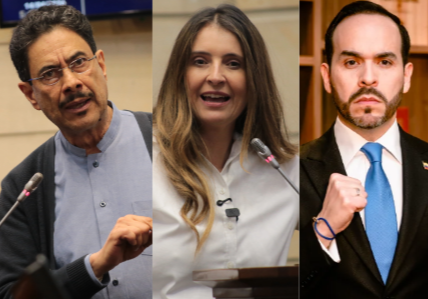
Polls show a tight race for the May 31 vote between three candidates: Leftist senator Ivan Cepeda, far-right lawyer Abelardo de la Espriella and center-right senator Paloma Valencia.
If no candidate wins more than 50%, a second round between the top two vote getters will be held on June 21.
In most polls Cepeda leads, with de la Espriella in second place, but Valencia could surprise as she counts on support from established parties and won 3.2 million votes, or 55%, in primaries held in March by nine center-right candidates.
De la Espriella’s new party Defensores de la Patria has no seats in the recently elected Congress, but its ally, Salvacion Nacional, has one seat in the 161-member Lower Chamber and four in the 103-member Senate.
Meanwhile, the parties that support Valencia – the Democratic Center, the Liberal Party, the Conservative Party and Partido de la U – have a total of 87 seats in the Lower Chamber and 49 in the Senate.
What is the economic and business legacy of four years of Petro and his government? What is his security legacy?
What will happen to Colombia’s economy if Cepeda wins the presidential election? What will happen to security situation if he wins?
If Valencia or De La Espriella win the election, what is the outlook for Colombia’s economy? If either one of them win the election, what is the outlook for security?
Latinvex asked two experts: Alberto J. Bernal, Chief Global Strategist, XP Investments and Maria Berliner, Chief Strategy Officer, RTG-Red Team Group, Inc.
PETRO ECONOMIC LEGACY
Latinvex: What is the economic and business legacy of four years of Gustavo Petro and his government?
Bernal: I believe that the evidence speaks for itself. President Gustavo Petro is leaving his successor with the worst fiscal situation that this country has EVER experienced, with the expected YE 2026 fiscal deficit amounting to +/- 7% of GDP, a level that surpasses the one that the country saw during the pandemic, with a rapidly growing debt/GDP ratio, and he’s leaving Colombia with the worst credit rating that this country has EVER held. Looking at economic growth, the economy expanded a mediocre 2.1% on average during the quarters when Petro led the nation, well below the country’s long-term average (3.4% y/y). Perhaps of greater concern, President Petro’s tenure coincided with the worst investment/GDP performance this nation has ever seen during a presidential term (the average investment/GDP ratio stood at 10.39% during Petro’s tenure). This is a very problematic occurrence for this country, as the lower the participation of investment/GDP, the lower the level of potential growth. Also, President Petro is leaving the country with a very complicated inflation outlook, with the markets expecting the headline inflation rate to be at 5.7% in one-years’ time. Colombia did not meet its CPI target at any point during Petro’s tenure.
Berliner: They are too many to enumerate here, but they can be reduced to chaos, disarray, and statist/socialist policies rather than capital formation and open markets. After Petro, Colombia boasts today: increased coca plantations from 42 thousand hectares to 300 thousand; loss of reputation as a credible market for foreign and domestic investors; and growing drug trafficking that makes the country a narco state. Granted Colombia needed to reduce its staggering income inequality but not with Petro’s legacy: grand corruption at levels not seen in Colombia before; increased social disparities; class antagonisms; and political polarization. On the business side, capital left Colombia degraded by the rating agencies. The raised minimum wage has led to the closing of small businesses and relatively high unemployment, although official figures say the contrary.
PETRO SECURITY LEGACY
Latinvex: What is the security legacy of Petro?
Bernal: The Petro administration decided to implement the so-called “Paz Total” strategy (total peace strategy) since it took office. The fundamental idea behind the peace strategy of President Petro is to lure criminal gangs, narcotraffickers, and terrorist organizations, in general, to cease their attacks against civil society in exchange for sharply lower penalties for their crimes. In other words, the security strategy was one based on “appeasement” since the beginning. Based on the available numbers and the public perception of physical security, the strategy has proven to be a resounding failure, and the next president of the country will face a very tough ordeal to recuperate some semblance of manageable physical security. This is the reason why pivoting the security strategy has become a key message from –both—the Valencia and De La Espriella campaigns.
Berliner: Petro squandered the good will of a majority of Colombian voters. Paz Total, Petro’s signature promise, has turned into Insecurity Total. Massacres of civilians and uniformed national security and law enforcement forces continue to plague the states of Cauca, Narino, Putumayo and the northwest of Antioquia. General insecurity permeates the major cities, particularly, Bogota. The peaceful marches called by Petro for a constitutional reform have turned out to be made up of people who only want a free trip and free food. But by the grace of God, Colombia’s constitution, institutions, and regulatory agencies have held somehow under the onslaught of socialist government decrees against them.
CEPEDA VICTORY
Latinvex: What will happen to Colombia’s economy if Ivan Cepeda wins the presidential election?
Bernal: I would forecast that a win by candidate Cepeda will be received by a major financial crisis, by a “buyer’s strike” of Colombia’s public sector debt, very significant FX weakness, and a complete collapse in Colombia’s equity market. Here is a complicated background fact: foreigners currently own some +/- 20% of Colombia’s total local debt load, and the local market is currently not developed enough to accommodate for an outflow of such magnitude. For an eventual Cepeda administration to be able to control the complicated dynamics just mentioned, he would have to name a market-friendly finance minister, a development we find quite unlikely to take place. In addition, Cepeda would have to announce a 180-degree change in Petro’s pension reform intentions –to allow for increased TES (public bonds) demand from local private pension funds to materialize.
Berliner: Many voters fear Cepeda is Petro on steroids. If he wins, we can expect a more statist/socialist form of government. We can expect deeper pension and tax reform. Tax reform will mean increased taxes for wealthy taxpayers and large, established corporations. There will be increased statization of the healthcare system and increased political and social polarization. Partition of fincas into small parcels will be given free of charge to dispossessed native Indian and peasant populations. Growing inflation and more reductions in the ratings of the rating agencies will happen, not to mention the enhanced displeasure of the Colombian government by the USA.
Latinvex: What will happen to Colombia’s security situation if Cepeda wins the election?
Bernal: It is no secret that candidate Ivan Cepeda has been close to illegal guerrilla groups, especially the FARC, and that he is one of the founders of the so-called security strategy “paz total.” Also, the father of Cepeda was one of the founders of the FARC. Cepeda was also close to former leaders of the FARC, not least alias “Jesus Santrich”, a drug lord that tried to evade justice with the help of the Pacto Historico party, and alias “Raul Reyes”, the former member of the FARC and the new boss of the so-called “La Nueva Marquetalia,” who is said to be responsible for the assassination of senator Miguel Uribe.
Berliner: Violence and insecurity will increase as some loyalist groups are pitted against others. Common robberies, assaults, murders, and massacres will increase because lawlessness will continue to prevail as the law of the land among the criminal elements of society. The violent situation in Cauca state will become worse as civilians and indigenous people are attacked by criminal gangs to secure more routes for illegal drugs and sundry contraband. So it will continue to spread to the northwest of Antioquia and bordering Choco state.
OPPOSITION VICTORY
Latinvex: If Paloma Valencia or Abelardo De La Espriella win the election, what is the outlook for Colombia’s economy?
Bernal: My sense is that financial markets will celebrate a victory of either Paloma Valencia or Abelardo de la Espriella with major rallies. And for the economy to start to take a turn for the better, and to do it fast, both candidates will be pressed to boost activity in the hydrocarbons and mining sectors.
Berliner: If either wins a lengthy restoration of the economy will take place. But this will only be the beginning. It will take years to repair the statization driven by Petro. The restoration will be helped if the rating agencies raise Colombian rating and foreign direct investment, other than China’s, pour legally into the country. Taxes on corporations and the rich will be lowered, and the statization of the healthcare system will be reversed. Both will seek to decrease violence and insecurity. The banking system will be allowed to operate without the strangling regulations of today.
Latinvex: If Valencia or De La Espriella win the election, what is the outlook for Colombia’s security?
Bernal: An eventual presidency of Abelardo de la Espriella would most likely prove to be “tougher” in terms of physical security because his political base would be mostly made up of “uribistas” that will be demanding the IMMEDIATE implementation of some sort of “democratic security” strategy, just as former president Uribe did in 2002. Not that Paloma Valencia would prove soft on crime, she would definitely NOT BE soft on crime, but her coalition is more dependent on the centrist vote, one that will likely continue to support the initiation of new peace negotiations in the future, of course, if minimum conditions to initiate such a process do come about. Under both governments, I would expect to see a very tight relationship with Washington.
Berliner: Both will take a hardline on Petro’s policies. De la Espriella, a divisive figure, who allegedly represented drug kingpins, will somewhat curtail his efforts to bring Colombia from the brink. He will focus on military and law enforcement spending, reduce taxes, and work to bring criminals to justice. He will curry favor with USA, badly damaged under Petro. Valencia will do the same but in a less confrontational way. Valencia wants to bring criminals to justice but in a less controversial manner than Petro has done where criminals have been given the upper hand. She wants to bring Colombians together to work for a common purpose without compromising national and personal security. If de la Espriella has a doubtful past, Valencia has the imprimatur of past-president Alvaro Uribe who is a plus in Antioquia but a curse in the rest of the country. However, each will govern without threats to the constitutional democracy of Colombia, which Petro has done and Cepeda will do.
© Copyright Latinvex